
Learning, Behavior & Social-Emotional Needs Testing in Turlock, Modesto, & Surrounding Areas
a brighter future starts with Understanding
Through assessments and guidance from a Licensed Educational Psychologist, you’ll finally know what your child needs to succeed.
Schedule Your Free ConsultationNot knowing is the hardest part
If you just knew what was wrong, you could provide for your child’s unique needs. But without that clarity, it’s all guesswork, and your child continues to struggle.


answers that bring relief & a pLan




experience & expertise that make a difference
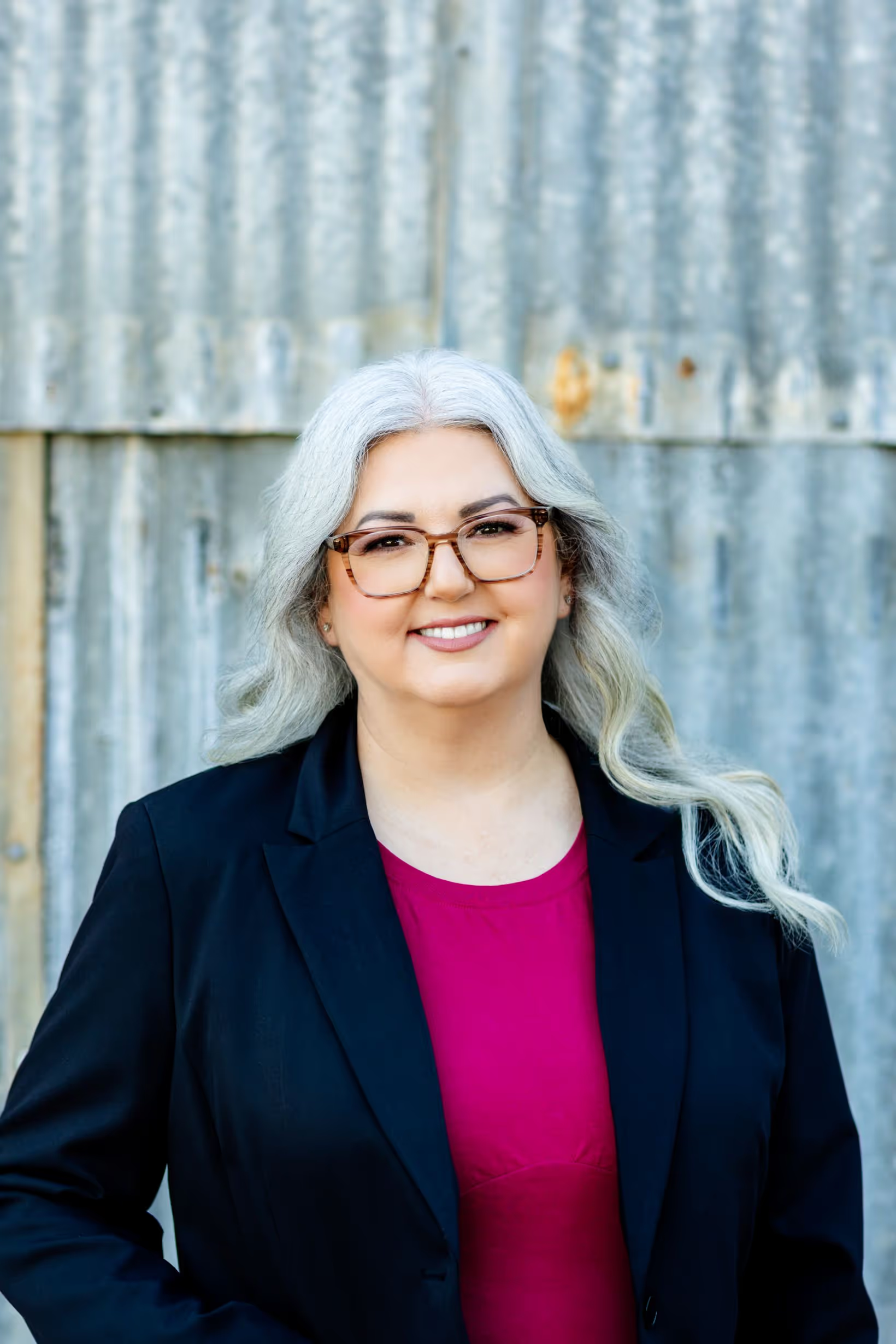
I’m Dr. Diana Gilbert
A bilingual (Spanish/English) Licensed Educational Psychologist (#4281) and Doctor of Education, with more than 20 years of experience working in various school positions.
I’ve walked alongside countless families, helping them move from uncertainty to clarity.
My role is simple: to listen with compassion, provide thorough evaluations you can trust, and empower you with the knowledge to confidently advocate for your child’s needs.
getting started is simple
Book Your Free Consultation
Understand Your Child’s Needs
See Your Child Thrive
services to support your child’s success

Psychoeducational Evaluations
When your child is struggling, a clear evaluation can uncover the “why” behind their challenges and point the way forward. A psychoeducational evaluation can look at your child’s processing and learning, attention, social-emotional functioning, and daily living skills, giving you the answers you’ve been searching for.

ADHD
difficulties with attention, focus, and impulsivity
Autism
differences in communication, social interaction, and behavior
Anxiety
emotional regulation troubles that impact school and daily life
Dyscalculia
struggles with math understanding and problem-solving
Dyslexia
challenges with reading and comprehension
Dysgraphia
difficulties with writing and written expression
Intellectual Functioning
challenges with reasoning, problem-solving, and adaptive skills that affect learning and independence

Counseling
Many children experience big emotions, behavior difficulties, or low self-esteem that impact their daily lives and education. Counseling provides a safe, supportive space where your child can learn new ways to manage challenges and develop greater confidence.


Testimonials
FAQs
I think my child needs help, but what exactly is a psychoeducational evaluation?

A psychoeducational evaluation helps us understand how your child learns, thinks, and processes information. It can look at areas such as attention, memory, language, problem-solving, and academic skills, along with emotional and behavioral factors that may be affecting learning. The goal is to identify their unique strengths and the areas where they might need support so you can move forward with clarity and confidence.
Do you work with adults, too?
.svg)
Yes. While many of my clients are children and teens, I also work with adults who are seeking clarity about their learning, attention, or social communication profile. Whether you are exploring possible ADHD, Autism, or learning differences, an evaluation can help you better understand your strengths, challenges, and the strategies or accommodations that will help you thrive at work, in school, and in daily life.
Can a psychoeducational evaluation also help if I’m concerned about my child’s anxiety?
Yes. A psychoeducational evaluation explores the whole picture and helps us understand how emotional well-being and learning interact. This allows us to tell the difference between anxiety that may be affecting school performance and underlying learning differences, so that recommendations for services and accommodations truly fit your child’s needs.
Can a psychoeducational evaluation tell me if my child has ADHD or something else going on?
Based on your areas of concern, an evaluation assesses attention, executive functioning, processing speed, and self-regulation, as well as other related skills. These findings, combined with input from parents, teachers, and behavior observations, help determine whether ADHD or another factor, such as anxiety, or learning differences, is contributing to your child’s challenges. The goal is to understand why your child is struggling, so you can best support them.
What does a full ADHD evaluation look like at your practice?
Our ADHD evaluations are comprehensive and collaborative. I gather background information, review school and developmental history, and use evidence-based assessments to look at attention, executive functioning, learning, and emotional well-being. I also include teacher and parent input and may also go and observe your child in their learning environment so I understand how your child functions across different settings. After testing, I meet with you to discuss the results in plain language, highlighting both your child’s strengths and practical next steps for support at home and at school.
What ages do you work with for Autism evaluations?
I provide Autism evaluations for children, teens, and young adults, typically starting around age 4 through college age.
What happens after a psychoeducational evaluation?
After your child’s evaluation, I will meet with you to review the results in a clear and meaningful way. You will receive a written report that explains your child’s learning profile, any diagnoses if applicable, and specific recommendations for school, home, and emotional support. I will also take time to answer your questions and connect you with next steps, such as school accommodations, community resources, or counseling options if needed.
Will insurance help cover the cost of the evaluation?
Psychoeducational evaluations are not typically covered by insurance because they focus on learning and educational needs rather than medical treatment. I’m happy to provide a superbill that you can submit to your insurance company for possible reimbursement. I also offer CareCredit, which makes payment more manageable by allowing you to pay over time with flexible, interest-free options for qualified applicants.

What’s the difference between a school-based evaluation and a private psychoeducational evaluation?
School-based evaluations are designed to determine whether a student qualifies for special education services or accommodations. They focus on identifying whether a child meets specific criteria under educational law.
A private psychoeducational evaluation, on the other hand, is much more comprehensive. It looks beyond eligibility to understand how your child learns, where they shine, and what specific supports will help them succeed. The results can be used to guide school planning, therapy, or home strategies, and are shared in a collaborative way that empowers you to advocate for your child’s needs both inside and outside of school. Private psychoeducational evaluations can also provide a diagnosis, where applicable, which can help you access supports and services for your child.
When should a child see a counselor?
A child might benefit from seeing a counselor if they are struggling with feelings, behaviors, or challenges that seem overwhelming or are affecting their daily life, relationships, or schoolwork. This could include ongoing stress, anxiety, difficulty regulating emotions, or challenges with social interactions. Counseling provides a safe space for children to express their feelings, gain coping skills, and work through their struggles in a supportive environment.
What age should a child start counseling?
There’s no specific age to start counseling, as it depends on your child’s individual needs. Some children benefit from counseling as early as preschool age, especially if they are dealing with separation anxiety, social challenges, or major life transitions. School-age children and teens may need counseling to help them navigate complex emotions or stressors like peer pressure, academic pressure, or family changes.

answers are waiting for you
The uncertainty, the overwhelm, the guessing, the sleepless nights… they take a toll on both you and your child. But there is a way forward.
Through comprehensive evaluations, you can finally understand your child’s needs and take the right steps forward. Families across Stanislaus, San Joaquin, and Merced counties are finding relief in having answers to their child’s learning or behavioral differences, and the confidence to get them the support they deserve.